
Contact Our Team
Enquire Now
Contact Us
Thank you for contacting Biomedical Sports Podiatry.
We will get back to you as soon as possible.
Please try again later.
Send Us a Message
Contact Us
Thank you for contacting Lord Street Podiatry.
We will get back to you as soon as possible.
Oops, there was an error sending your message.
Please try again later.
What to Expect
New Patients
This guide gives new patients a clear and helpful overview of what to expect before their first appointment. Here you’ll find information on how to book a consultation, what to bring, how assessments work, and the support options available, including NDIS packages and accepted health funds.
What to Bring to Your Assessment
To help us perform a thorough assessment, please bring:
- Any relevant imaging, including X-rays, MRI, ultrasound, CT, or scan reports
- Any referrals or reports from your GP, specialist, physiotherapist, or other health professional
- A selection of the footwear you wear most often, including:
- Everyday shoes
- Work shoes
- Running or training shoes
- Shoes worn around the home
Your footwear is an important part of the assessment, as it can significantly influence your lower limb biomechanics and symptoms. We may also ask for details of your local doctor and any relevant specialists if further reporting or communication is required.
What to Expect At Your Assessment
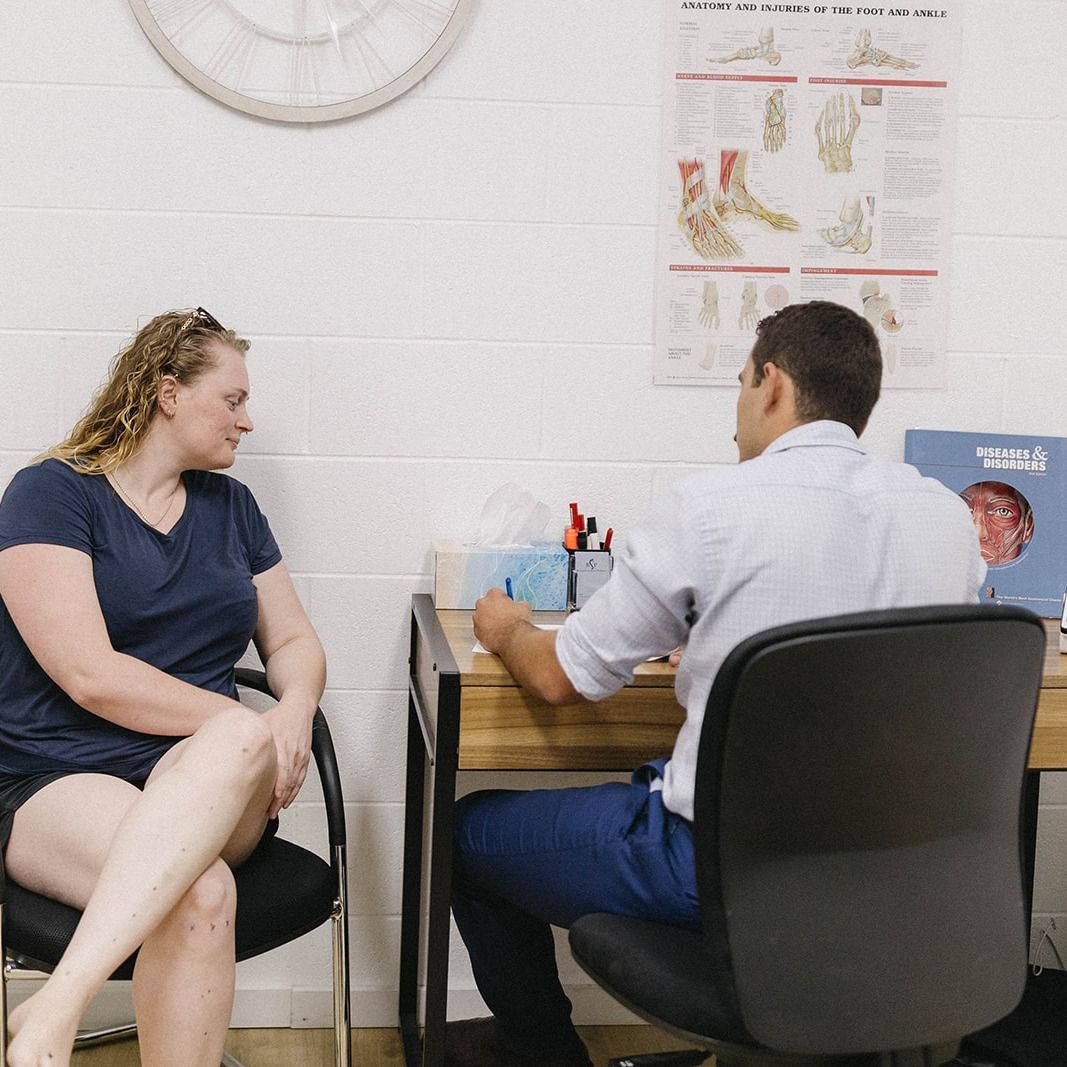
During your biomechanical assessment, one of our experienced podiatrists will complete a detailed evaluation of your feet and lower limbs to identify the likely cause of your pain and determine the most appropriate treatment plan.
This assessment may include:
- Joint range of motion testing
- Muscle strength testing
- Lower limb alignment assessment
- Foot posture assessment
- Gait analysis
- Functional movement assessment
You may be asked to walk barefoot during part of the gait assessment so we can observe how your feet and lower limbs function during movement. It is recommended that you wear or bring shorts, as this allows better assessment of the knees, lower leg alignment, and ankle mechanics.
Following the assessment, your podiatrist will explain the findings and discuss the most appropriate treatment options.
Common treatment recommendations may include:
- Custom orthotics
- Footwear advice and footwear modifications
- Stretching and strengthening programs
- Joint mobilisation or manipulation
- Taping techniques
- Dry needling or soft tissue therapy, where appropriate
NDIS Packages
We welcome clients under the NDIS (National Disability Insurance Scheme).
- We support self-managed and plan-managed participants
- Services are tailored to your individual needs and goals
- Please contact us before booking if you have any questions about your plan or eligibility
Health Funds
We accept a wide range of private health funds.
- On-the-spot claiming may be available
- Please bring your health fund card to your appointment
- Rebates will depend on your individual policy